
Milano Cortina 2026: What a Global Event Reveals About How We Think, Argue, and Get Manipulated
Nisha Raman
Team Content
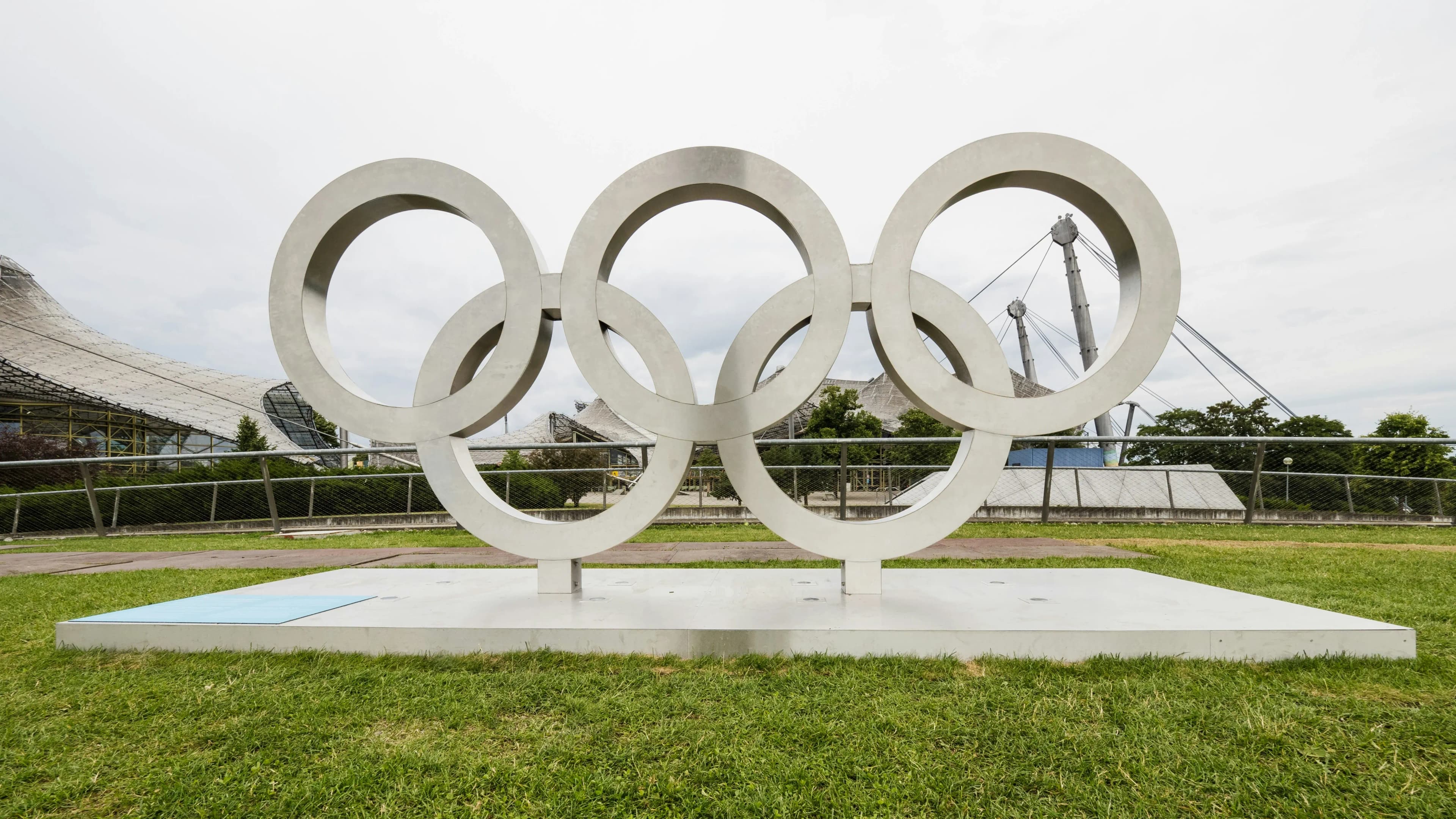
Milano Cortina 2026 drew global attention—dual flames, huge crowds, nonstop commentary. Here’s what it reveals about narratives, fallacies, and clear thinking.
The Milano Cortina 2026 Winter Olympics are not “just sports.” They’re a rare moment when billions of people look at the same thing at roughly the same time—then immediately argue about what it means. That is exactly what makes global events like the Olympics so useful for critical thinking: they compress human psychology into a few days of highlights, outrage, pride, cynicism, misinformation, and identity-driven commentary.
The opening ceremony itself set the tone: a visually ambitious, multi-location format, huge crowds, and a headline-grabbing “first” that almost guaranteed discourse would spiral—two Olympic flames lit in two different places. Within hours you could see the usual pattern: some people celebrating unity, some calling it wasteful theatre, some turning it into politics, and many repeating strong opinions after watching a 12-second clip.
This article is a deep dive into what a global event like Milano Cortina 2026 reveals about how we interpret reality, how fallacies show up in “normal” conversation, and how to stay grounded without turning into a joyless skeptic.
TLDR
- What it is: A case study of how global events amplify fallacies, emotional reasoning, and identity-driven narratives.
- Why it happens: Clips, headlines, and tribal incentives push people toward simple stories over nuance.
- How to spot it: Notice straw man framing, false dilemmas, red herrings, and emotion-as-evidence claims.
- How to respond: Ask what claim is being made, what evidence supports it, and what alternatives exist.
What does a global event like Milano Cortina 2026 reveal about how we interpret reality?
The Milano Cortina Winter Games opened in Italy with a ceremony that leaned hard into symbolism and scale. The distinctive headline: a dual-flame lighting, one in Milan and one in Cortina d’Ampezzo—presented as a way to unify the host locations and represent “harmony” across regions. The spectacle mattered because it created a perfect media object: easy to clip, easy to argue about, easy to use as proof of whatever you already believed.
Even if you don’t care about sport, you can learn a lot by noticing how quickly the conversation becomes about values rather than details. People weren’t debating the engineering of two cauldrons. They were debating the story: “unity,” “excess,” “national pride,” “global distraction,” “cultural flex,” “commercialism,” “soft power,” and more.
Then competition begins, and attention spikes again when early medals land—especially when it’s a host-country moment and the crowd energy is obvious. This pattern repeats: a symbolic trigger, then a performance trigger, then a social-media trigger.
Why do global events distort thinking so reliably?
Global events generate fallacies not because the event is uniquely “toxic,” but because the event creates the perfect conditions for faulty reasoning.
1) Attention is scarce, so people accept shortcuts
Most people experience the Olympics through:
- clips (10–30 seconds),
- headlines,
- friend commentary,
- memes,
- influencer reactions.
This is not a moral failure. It’s how modern information works. But it creates a predictable problem: the brain tries to build a full worldview using partial input. That’s the birthplace of overconfidence.
2) Identity turns observation into loyalty tests
The Olympics is national identity on a schedule. You can watch how quickly simple statements become tribal:
- “We’re proud.”
- “They’re cheating.”
- “The judges are biased.”
- “That country is arrogant.”
- “These protests prove…”
Once identity enters, people stop asking, “Is this true?” and start asking, “Is this on my team’s side?”
3) Emotion becomes the argument
A lot of commentary is basically:
- “I felt moved, therefore it was meaningful.”
- “I felt angry, therefore it was corrupt.”
- “I felt bored, therefore it was pointless.”
Emotions are real. But emotions aren’t evidence. They are a starting point for reasoning, not the conclusion.
4) Everyone wants a single story
Humans hate messy causality. We want a clean narrative:
- the event proves unity,
- the event proves decline,
- the event proves corruption,
- the event proves hope.
But large events contain multiple truths at once. The trick is to hold complexity without collapsing into a slogan.
What fallacies show up around big global events like Milano Cortina 2026?
This is where your site’s mission becomes immediately relevant. During global events, fallacies appear in the wild at high frequency because the incentives reward persuasion, not accuracy.
Straw Man: “So you’re saying…”
People will take a nuanced critique of the Olympics and inflate it into an extreme position, or take a celebration of the Olympics and frame it as blind nationalism.
How it appears:
- “I like the ceremony” becomes “So you support propaganda.”
- “This is expensive” becomes “So you hate athletes and culture.”
- “We should discuss impact” becomes “So you want to cancel everything.”
If you want the pattern breakdown, see: Straw Man Fallacy
How to respond without escalating:
- “That’s not what I’m saying. I’m saying X.”
- “Can we separate ‘I enjoyed it’ from ‘I endorse everything about it’?”
False Dilemma: “Either it’s inspiring or it’s corrupt”
Global events invite binary thinking because it’s emotionally satisfying.
Typical frame:
- Either the Olympics unites humanity, or it’s a meaningless distraction.
- Either the event is good for the host, or it’s always exploitation.
- Either you support it, or you oppose sport itself.
How to respond:
- “Both can be partly true. What specific claim are we evaluating: culture, economics, environment, or politics?”
Red Herring: “You’re ignoring the real issue”
This is the internet’s favorite move. Any discussion becomes a competition to introduce a different topic that feels morally heavier.
Common pattern:
- Talk about athletes → someone pivots to geopolitics.
- Talk about sustainability → someone pivots to celebrity drama.
- Talk about ceremony symbolism → someone pivots to corruption allegations in general.
See: Red Herring Fallacy
Why does >- matter outside debates?
This fallacy does more than weaken arguments. It can influence hiring, purchasing, policy decisions, and relationships because it makes a weak conclusion feel justified. When the reasoning is wrong, the decision can be wrong even if the speaker sounds confident.
In fast-moving situations, people default to shortcuts. Recognizing the pattern helps you slow down and ask for real evidence before you accept the conclusion.
What is a quick checklist for >-?
Use this quick checklist to test whether the reasoning is valid before you accept it.
- What is the exact claim?
- What evidence is offered?
- Is the evidence relevant and sufficient, or just persuasive?
- What key link between reason and conclusion is missing?
- Would the claim still stand if you removed labels or emotion?
What misconceptions lead to distorted takes on Milano Cortina 2026?
A major misconception is that a single clip or headline captures the whole story. Another is that emotional reactions count as proof. Global events compress complexity into symbols, which makes it easy to overgeneralize or assume intent without evidence.
How can you break down Milano Cortina 2026 claims step by step?
Use a simple breakdown to keep discussion grounded.
- Claim: what is being asserted about the event.
- Evidence: what facts are offered.
- Alternative explanations: what else could explain the same facts.
- Conclusion: what the evidence actually supports.
How do you explain Milano Cortina 2026 fallacies to someone skeptical?
Start with shared values—sports, culture, or fairness—then show how the reasoning jumps from a symbol to a conclusion. Emphasize that you are evaluating claims, not attacking the event or the people who enjoy it.
FAQ
Why do global events trigger so many fallacies?
They compress complex reality into viral moments, which rewards shortcuts and tribal framing.
Is it wrong to feel emotional about events like the Olympics?
No. Emotion is a starting point, but it should not be treated as evidence.
How can I discuss global events more clearly?
Separate values from facts, name the specific claim, and look for verifiable support.
References
- Stanford Encyclopedia of Philosophy (Fallacies)
- Internet Encyclopedia of Philosophy (Logic and Critical Thinking)
- Nizkor Project (Fallacies)